
Latest News

Businesses using cash to dodge obligations
The ATO is ‘cracking down’ on businesses that use cash to dodge obligations on their tax, employer and business. Businesses that do this may: – fail to report all sales transactions and fail to issue receipts; – avoid paying GST, income tax, PAYG withholding, super guarantee, insurance and work cover protection; – report their income […]

$20,000 instant asset write-off extended
Editor: The Government recently passed legislation to extend the $20,000 instant asset write-off for small businesses by 12 months to 30 June 2026. Taxpayers should note that if their business has an aggregated annual turnover of less than $10 million, they may be able touse the instant asset write-off (‘IAWO’) to immediately deduct the business […]

Tax dodgers banned from leaving the country
The ATO is actively using departure prohibition orders (‘DPOs’) as part of a broader shift towards strengthening payment performance and debt collection. A DPO is an enforcement action available to the ATO to prevent certain persons with tax liabilities from leaving Australia without paying their outstanding tax. Since July 2025, the ATO has issued 21 […]

Paying super guarantee
The ATO is reminding employers that they must pay super guarantee (‘SG’) contributions for eligible employees. Employers need to pay a minimum of 12% (the current SG rate as from 1 July 2025) of each employee’s ordinary time earnings into a complying super fund on a quarterly basis (the due date for the March 2026 […]

Taxpayer’s dog breeding activities held to be an enterprise
The Administrative Review Tribunal (‘ART’) recently held that a taxpayer had carried on an enterprise of dog breeding for GST purposes. He had lodged activity statements for the quarters ended 30 September 2018 to 31 December 2021 inclusive, claiming input tax credits (‘ITCs’) for the dog breeding activities he carried on from his home (among […]

Time limits on GST and fuel tax credit claims
Taxpayers should note that GST credits and fuel tax credits will expire if not claimed within the 4-year credit time limit (i.e., generally four years from the due date of the original BAS in which the taxpayer could have claimed them). Once credits expire, the ATO has no discretion or ability to amend the assessment […]

Correctly dealing with rental property repairs
Taxpayers who have had work done on their rental property should ensure the expense is categorised correctly to avoid errors when completing their tax return. A deduction for ‘repairs and maintenance’ expenses can be claimed for work done to remedy, or prevent defects, damage or deterioration from using the property to earn income. These expenses […]

Tips to help sole trader clients
The ATO is seeing sole traders make mistakes in the following areas: not reporting all income — this includes income earned outside their business (like a ‘side hustle’), cash jobs, or payments in-kind/barter deals; overclaiming expenses — this includes claiming the portion of an expense related to personal use, or overstating the cost of goods […]

ATO warning regarding private use of work vehicles and FBT
Employers that supply work vehicles to their employees need to check how the work vehicles are used and whether any exemptions apply to determine if they attract fringe benefits tax (‘FBT’). FBT generally applies when a work vehicle is made available for private use, even if it is not actually used. Private use includes any […]

ART dismisses argument that medical expenses were deductible
In a recent decision, the Administrative Review Tribunal (‘ART’) held that a taxpayer could not claim a tax deduction for medical expenses incurred by him in relation to his total and permanent disability pension. The taxpayer had been terminated from his employment due to total and permanent disablement (‘TPD’). For the 2024 income year, his […]
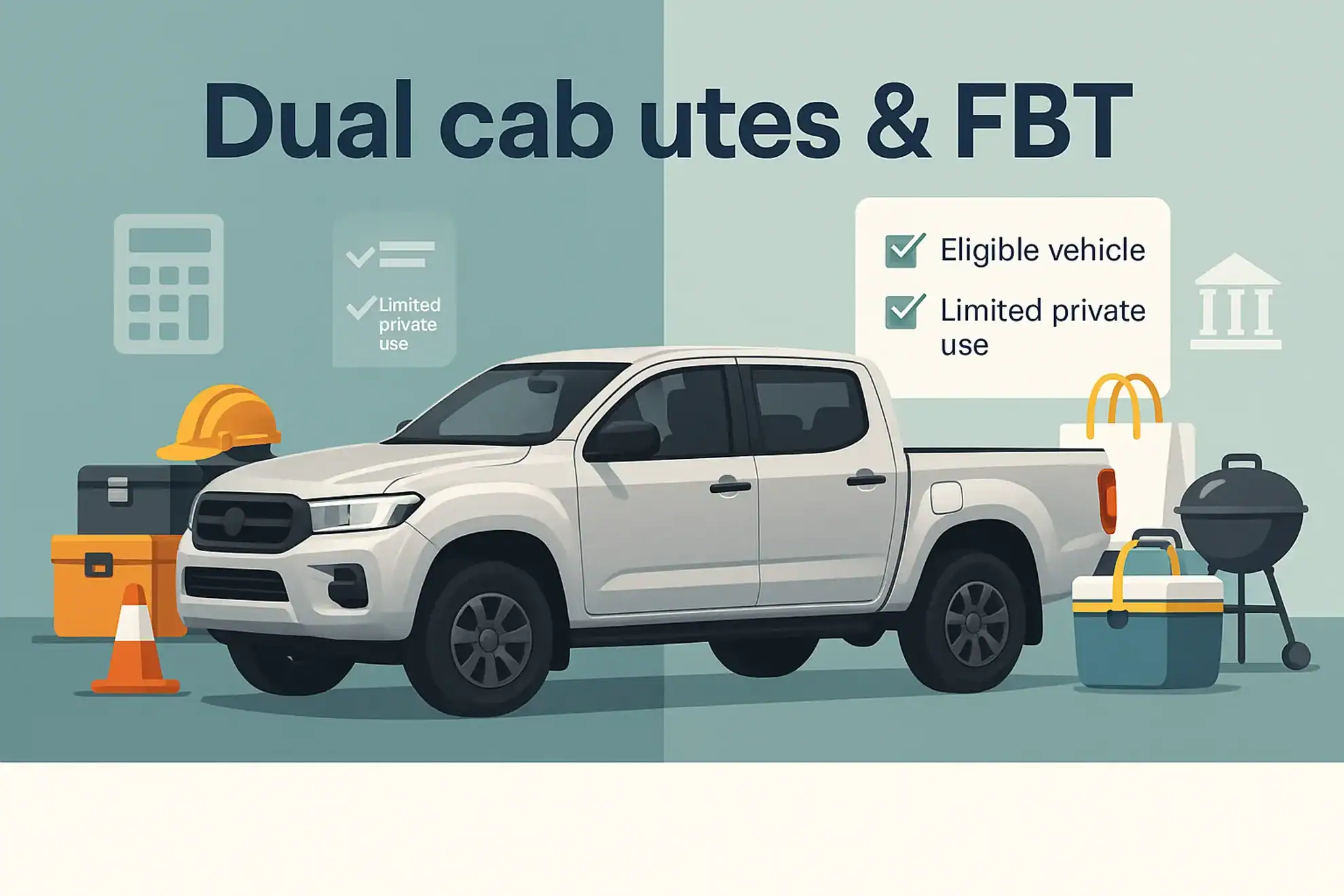
Dual cab utes and FBT
The ATO wishes to dispel the ‘common myth’ that dual cab utes are automatically exempt from fringe benefits tax (‘FBT’). If an employer provides dual cab utes to staff to complete their duties and the vehicle is available for personal use, then the benefit may be subject to FBT. By understanding how their employees use […]

SMSF non-compliance with release authorities
Release authorities are documents issued by the ATO to super funds, authorising the release of money from a member’s super account to pay specific liabilities, including in relation to excess concessional contributions, excess non-concessional contributions, and Division 293 tax assessments. The ATO is seeing a rise in SMSFs that receive a release authority and are […]